Thursday, 20 October 2011

The Essay (Week 12)

All done! So here it is. The question I chose was:

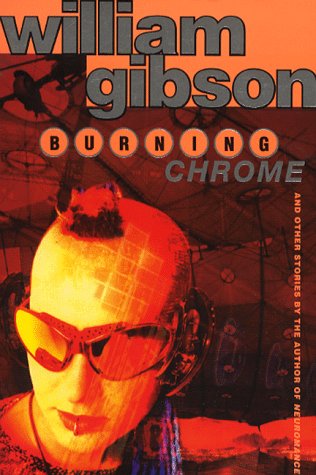
Choose a William Gibson short story such as Burning Chrome (see readings week 10). Compare the economic and social world it conjures with the imagined world of another cyberpunk author’s short story or novel (Neal Stephenson's 'Snow Crash.'). How close are these imagined worlds to our world and are we moving towards the imagined worlds or away from them?

And here it is:


Cyberpunk is a term coined by Bruce Bethke in 1982, and later popularised by science fiction editor Gardner Dozois (Encyclopaedia Britannica, 2011). It describes a wide genre, encompassing film, literature, art, and even music. The core concept behind all of these however, is the idea of a disillusioned loner on the edge of society, fighting a world that is increasingly technological and dehumanised. Many science fiction authors have written in the genre, among them household names like William Gibson, considered by many to have written the archetypal cyberpunk work with ‘Neuromancer,’ and Neal Stephenson, a relative newcomer to the genre. A common factor in all cyberpunk literature, including both Gibson and Stephenson, is the speculation of the technological, social, and economic situation that will be present in the future, evident through their novels. This essay will compare two cyberpunk works, ‘Burning Chrome,’ by William Gibson, and ‘Snow Crash,’ by Neal Stephenson, in terms of the social and economic futures predicted by the novels. This will then be compared with reality of the modern day, and as to whether these predictions are realistic.

The social futures typically presented by the cyberpunk genre are that of a dystopian society, generally in decline, with the advancement of technology disrupting society and the way the inhabitants of the society interact. This can be seen in both Burning Chrome and Snow Crash, with possibly the most important technological advancement in the novels – the Simulation Matrix, and the Metaverse. In Burning Chrome, the Matrix is “an abstract representation of the relationships between data systems,” a 3D virtual word in which the user is completely immersed (Gibson, 1986 p.196). The Metaverse, in comparison, is a 3D virtual world in which you can create or purchase your ‘avatar,’ and interact with other people in real-time. Property and advertisements, or ‘animercials,’ can be purchased using real money, in the virtual world. There is a blurring between life in reality, and life in the Metaverse.
This decline of society can also be seen in the way in which the physical society is structured in both novels. In Burning Chrome, the story is set in the Sprawl, a colloquial term for the Boston-Atlanta Metropolitan Axis, a huge megacity. In this representation of the future, space is at a premium, and virtually the entire East Coast of the United States has merged into one huge city. The majority of people are poor, but technology is easily accessible to all, allowing anyone to access the Matrix, or enjoy ‘simstims,’ a form of entertainment that allows people to experience a television program as seen through the eyes of the protagonist. Enhancements and augmentations to the body are also available, with the main character of the novel having a mechanised prosthetic arm, and other characters having eye augmentations, allowing them to record video through tiny cameras implanted in their eyes – the basis for simstim. In Snow Crash, society has disintegrated even further; governments and nations have broken down, and areas, armed forces, and even religions are owned by huge corporations, such as “Mr Lee’s Greater Hong Kong,” or “The Reverend Wayne’s Pearly Gates.” Universal laws and the justice system don’t exist; each corporation, or ‘franchise,’ has their own set of laws for their different areas, enforced by a private security corporation. As a result, crime isn’t necessarily wrong anymore - the Mafia operate in the open, as just another corporation. Society is dominated and controlled by corporations, and as such, money.

In the same way as society is generally portrayed as declining in the cyberpunk genre, the economy of these future times is usually just as grim, and is closely intertwined with the state of society itself. There is a large gap between the poor and the rich, and few in the middle ground. Technology has advanced, but the imagined ‘better life’ or ‘utopia’ that it would bring has fallen far short, a concept central to cyberpunk. In Burning Chrome, while technology and its benefits are available to anyone, irrespective of their financial status, the majority of citizens in the Sprawl just manage to scrape a living. Lower quality technology is available for a cheaper price, but it has serious side effects, as can be seen with the Seikon eye-implants. Apartments and living spaces are squashed together, and the population has skyrocketed. Snow Crash has a similar view of the economic future, in a system that can be described as ‘anarcho-capitalism.’ Governments and nations have collapsed, or are generally ignored, everything has been privatised, and hyperinflation has occurred, with “street people pushing wheelbarrows piled high with dripping clots of million- and billion-dollar bills that they have raked up out of storm sewers” (Stephenson, 1992 p.146) Space is also at a premium, with people (including the protagonist) living in shipping containers, or regimented identical housing estates. There is just as great a distinction between rich and poor, and society; religions, roads, housing, land, justice, and defense, are run entirely by corporations and businesses, all competing. The line between reality and the Metaverse has blurred, and money can be made through the virtual world, and vice versa, with the sale of land, avatars, and entertainment.

Aspects of the societal and economic futures predicted in both cyberpunk novels are certainly possible in reality both in the future, and today. In terms of technology – the worlds presented in both these novels are either already possible, or well on their way. Car HUDs on windscreens, Virtual Reality worlds, the Matrix, more advanced computers and devices – it’s just a matter of time, as our own level of technology rises. In terms of the social and economic futures presented, it’s less certain. It’s true we are withdrawing, communicating more through technology and becoming increasingly isolated, despite having more connections than ever before (Fox, 2010). Facebook can be seen as a primitive form of the Metaverse, while the internet itself is similar to both the Metaverse and the Matrix. We spend most of our time using it, either for entertainment, communication, or work. It is a medium through which you can become someone else, do things you couldn’t in real life – and things you could. Money can be made through it, despite the fact that it doesn’t physically exist. The economic future presented by both novels, can also be seen in today’s world, albeit to a lesser extent. Our world population is rising, corporations have more power and money than some governments, the gap between rich and poor is broadening, and technology, while advancing, is also becoming cheaper and more available (Deen, 2005; Sarno, 2011; AP, 2008). While this technological advancement has huge benefits for some, we are increasingly moving closer towards the dystopia of the cyberpunk future: the failed promise that technology will make life better for everyone.  


References
-          Associated Press, 2008, ‘Study: Gap growing between rich and poor,’ viewed 20 October, at http://www.msnbc.msn.com/id/27295405/ns/business-world_business/t/study-gap-growing-between-rich-poor/

-          Deen, T 2005, ‘Rising population threatens global security,’ viewed 19 October, at http://www.un.org/special-rep/ohrlls/News_flash2005/08%20July%20rising%20population.htm
-          Encyclopædia Britannica 2011, ‘Cyberpunk,’ viewed 11 October, at http://www.britannica.com/EBchecked/topic/147816/cyberpunk

-          Fox, M 2010, ‘New health policy: encouraging friendships?’ viewed 20 October, at http://www.reuters.com/article/2010/07/27/us-lifespan-relationships-idUSTRE66Q6KA20100727

-          Gibson, W 1986, ‘Burning Chrome,’ Harper Collins: Great Britain, London.

-          Sarno, D 2011, ‘Apple has more cash than US government,’ viewed 19 October, at http://www.smh.com.au/technology/biz-tech/apple-has-more-cash-than-us-government-20110801-1i6x6.html

-           Stephenson, N 1992, ‘Snow Crash,’ Bantam Books: New York


So there it is! I didn't post much up in the preceeding weeks, because a lot of the research required was just reading the two novels being compared. That, and the facts in the conclusion.

I hope you enjoyed it!

Wednesday, 19 October 2011

The Essay: nearly done! (Week 12)

Well the book arrived on Monday (which was a relief), and I managed to finish it yesterday. It's actually quite a good read, cyberpunk while also slightly satirical. Anyway, I finished the first body paragraph, that focuses on comparisons between the social structure presented in both books. In the main body paragraphs, I focus on camparing the two books, while in the final paragraph, the conclusion, I comment on its relevance and realism in regards to today's world.

Here's the social paragraph. I've nearly finished the economic comparisons too, so you can probably expect the entire essay to be up later tonight.


The social futures typically presented by the cyberpunk genre are that of a dystopian society, generally in decline, with the advancement of technology disrupting society and the way the inhabitants of the society interact. This can be seen in both Burning Chrome and Snow Crash, with possibly the most important technological advancement in the novels – the Simulation Matrix, and the Metaverse. In Burning Chrome, the Matrix is “an abstract representation of the relationships between data systems,” a 3D virtual word in which the user is completely immersed (Gibson, 1986 p.196). The Metaverse, in comparison, is a 3D virtual world in which you can create or purchase your ‘avatar,’ and interact with other people in real-time. Property and advertisements, or ‘animercials,’ can be purchased using real money, in the virtual world. There is a blurring between life in reality, and life in the Metaverse.
This decline of society can also be seen in the way in which the physical society is structured in both novels. In Burning Chrome, the story is set in the Sprawl, a colloquial term for the Boston-Atlanta Metropolitan Axis, a huge megacity. In this representation of the future, space is at a premium, and virtually the entire East Coast of the United States has merged into one huge city. The majority of people are poor, but technology is easily accessible to all, allowing anyone to access the Matrix, or enjoy ‘simstims,’ a form of entertainment that allows people to experience a television program as seen through the eyes of the protagonist. Enhancements and augmentations to the body are also available, with the main character of the novel having a mechanised prosthetic arm, and other characters having eye augmentations, allowing them to record video through tiny cameras implanted in their eyes – the basis for simstim. In Snow Crash, society has disintegrated even further; governments and nations have broken down, and areas, armed forces, and even religions are owned by huge corporations, such as “Mr Lee’s Greater Hong Kong,” or “The Reverend Wayne’s Pearly Gates.” Universal laws and the justice system don’t exist; each corporation, or ‘franchise,’ has their own set of laws for their different areas, enforced by a private security corporation. As a result, crime isn’t necessarily wrong anymore - the Mafia operate in the open, as just another corporation. Society is dominated and controlled by corporations, and as such, money.


I'll include references with the final essay. 

Wednesday, 12 October 2011

Essay introduction (Week 11)

So I decided to use 'Snow Crash' by Neal Stephenson. Unfortunately, seeing as I couldn't find it in any bookshops, I had to order it online. This wouldn't be a problem, as I ordered it about 2 weeks ago, but it still hasn't come. It should be here in a couple of days though. Hopefully.

Anyway, I was still able to write the draft introduction to my essay, which is as follows:


Cyberpunk is a term coined by Bruce Bethke in 1982, and later popularised by science fiction editor Gardner Dozois. It describes a wide genre, encompassing film, literature, art, and even music. The core concept behind all of these however, is the idea of a disillusioned loner on the edge of society, fighting a world that is increasingly technological and dehumanised. Many science fiction authors have written in the genre, among them household names like William Gibson, considered by many to have written the archetypal cyberpunk work with ‘Neuromancer,’ and Neal Stephenson, a relative newcomer to the genre. A common factor in all cyberpunk literature, including both Gibson and Stephenson, is the speculation of the technological, social, and economic situation that will be present in the future, evident through their novels. This essay will compare two cyberpunk works, ‘Burning Chrome,’ by William Gibson, and ‘Snow Crash,’ by Neal Stephenson, in terms of the social and economic futures predicted by the novels. This will then be compared with reality of the modern day, and as to whether these predictions are realistic.

And then I'll go on into my two main body paragraphs as discussed in my essay plan.
Here's hoping my book will arrive soon.

Wednesday, 21 September 2011

Blog Video (Week 9)

So I finished my video!
It's a little long, not including the title and credits, it's about 8 seconds over. But I got to the point where if I cut anything out, it wouldn't work very well. Also, the volume is pretty quiet for some annoying reason, so turn up your speakers when you're watching it.
It's called Incursion.


Concept:
'A man alone in a building late at night hears a noise, and seeks to find the cause of it.'

Shot with an iPhone, edited in iMovie, with the soundtrack via Creative Commons, edited in Garageband.

Thanks to:
Peter JM
Earl M

Sound:
- 'Movie Suspense' - Mike Koenig
- 'Witness the Fall of this Realm' - Dereleech
- 'Wither' - Scabeater
- 'Bump in the Night' - Kevin MacLeod
- 'Right Behind You' - Kevin MacLeod
- 'Supernatural Season 5' (less than 10% and for student non-commercial use) - Jay Gruska & Christopher Lennertz

This video is licensed under Creative Commons; it may be used and edited with attribution, but may not be used for commercial purposes.

Hope you  enjoy!

Censorsh*p and Democracy (Week 9)

This weeks lecture was on politics and the internet, and the ties between the two. One big way in which politics is impacting the internet, and vice versa, is censorship.

Censorship (or Shenshorship, if you're Sean Connery) is a big issue in Australian politics, particularly among the more internet savvy. The government wanted to introduce what they called the 'Clean Feed,' that is, a firewall that blocked sites that the government deemed dangerous or harmful. Their argument was that this would restrict access to terrorist and crime sites, as well as the adult sites that were particularly nasty, like child pornography.

Due to "limited interest" from the industry, the government dropped funding for the project. That said, our internet is currently being filtered right now. Telstra and Optus have both agreed to a voluntary censorship scheme in which they block more than 500 child abuse sites (and rightly so). 

There are plenty of people out there who want an 'Open Internet,' an internet free of censorship and firewalls. They argue that the idea of blocking single websites is a futile effort. As stated by System Administrators Guild of Australia board member Donna Ashelford, "The effectiveness will be trivial because you're just blocking a single website address (and) a person can get around it by changing that address with one character." In addition, the filter wouldn't block P2P networks or file sharing, so people distributing the offending material could simply go around it. And then there's the whole argument as to whether such a restriction would be 'unconstitutional.'

So does censorship have a place in a democratic society? Or is it an echo of China and the current restrictions there?

The United States of America, with Hillary Clinton, evidently believe that censorship is undemocratic. She gave a speech on internet freedom in the US and its importance.
"Now, ultimately, this issue isn’t just about information freedom; it is about what kind of world we want and what kind of world we will inhabit. It’s about whether we live on a planet with one internet, one global community, and a common body of knowledge that benefits and unites us all, or a fragmented planet in which access to information and opportunity is dependent on where you live and the whims of censors."
To be honest, I think she's right. While the idea of blocking harmful sites isn't a bad idea in itself, it's both unfeasible, and not particularly effective. To make matters worse though, the list of 'bad sites,' that the government was planning to block wasn't even shown to the Australian public. It had to be leaked. Not only are they trying to restrict access to the internet, but they aren't telling the public what it is they're blocking. Which meant that the government could potentially block a number of sites that aren't necessarily harmful, but that the government didn't want the public to see.

Now I'm not trying to sound like a crazy conspirist, wearing a tinfoil hat to stop the government from reading my mind, but that does bother me.

So yes, I think placing mandatory filters on the internet is undemocratic. It's forcing something on to the Australian public that many of them don't want. If you want to make the process democratic, have a vote on whether there should be a filter or not. And show the sites that will be blocked. That would be democratic.

References:

- Electronic Frontiers Australia, 'Learn More,' viewed 22 september at http://openinternet.com.au/learn_more/

- Dudley-Nicholson, J 2011, 'Telstra, Optus, to start censoring thye web next month,' viewed 22 September at http://www.news.com.au/technology/internet-filter/telstra-optus-to-begin-censoring-web-next-month/story-fn5j66db-1226079954138

- Jacobs, C 2010, 'The Future of Internet Censorship,' viewed 22 September at http://www.efa.org.au/2010/09/21/the-future-of-censorship/

- Clinton, H 2010, 'Remarks on Internet Freedom,' viewed 22 September at http://www.state.gov/secretary/rm/2010/01/135519.htm

Essay Plan (Week 9)

This week we have to plan out our essay. To be honest, I've barely thought about it, given it's due in week 12, and that I have plenty of other assignments due earlier. But anyway.

Because I enjoyed The Matrix, and mainstream cyberpunk media, I figured I'd choose this question:


Choose a William Gibson short story such as Burning Chrome (see readings week 10). Compare the economic and social world it conjures with the imagined world of another cyberpunk author’s short story or novel. How close are these imagined worlds to our world and are we moving towards the imagined worlds or away from them?

As for what two stories I'd choose to compare, I thought I'd do Burning Chrome (seeing as it's a reading) and either Snow Crash, by Neal Stephenson (I read his Anathem, which was interesting) or Do Androids Dream of Electric Sheep, by Philip K. Dick (the inspiration behind Blade Runner). I still haven't decided, but really, for a basic plan, it doesn't matter.

So here's the plan.

1. Introduction.
    I'll probably introduce cyberpunk briefly, introduce the topic question, and outline the essay.

2. 1st Body Paragraph.
Old-School.
    Here I'll compare the economic world both books conjure. I'll detail them, compare them, and then further compare them with reality.

3. 2nd Body Paragraph.
    Here we'll focus on the social. Again, I'll compare and compare again.

4. Probably the conclusion, it's only 1000 words after all. Here I'll sum up, presenting a combined view of what cyberpunk predicts and reality as it is and what it might be. Here I'll explicitly answer the question, using all the afore paragraphs as evidence.

So that's the plan!

Tuesday, 20 September 2011

New Concept (again). (Week 8)

So after some experimentation, my most recent concept involving the city, didn't work. There wasn't enough of a narrative to it, it was just a collection of shots of different parts of the city.

So I decided to try a different tack. I hate horror movies, but they way that they influence the viewer - with shadows, soundtrack etc. is pretty cool. So I thought i'd give a survival horror film a try. I shot in my local church, with the help of some friends at night, using only my iPhone, as was my intention all along.

My new concept is:

'A man, alone at night in a deserted building, hears a noise, and seeks to find its cause.'

Here are some clips - I shot more than I used, as is usually the case.


I posted them on YouTube as well, but couldn't find them in the YouTube embedding tool. So I just uploaded them here.

Next step is to cut and edit everything, then whip up a soundtrack.

Wednesday, 14 September 2011

Copyright and Creative Commons (Week 8)

This week, we looked at copyright and Creative Commons, and how it came about. Copyright is designed to protect the intellectual property of an individual or company. Movies, music, programs, etc. are generally all copyrighted; so that others can't claim the work as their own, or make money from it.It seems fair enough, in theory. In reality though, it is far more restricting, resulting in things like harmless fan-made videos on YouTube being taken down for copyright violation. So why doesn't strict copyrighting make sense for some things?

Originally, works were only copyrighted where there was the 'intention of commercial exploitation.' The US government granted copyright to authors only who had their work deposited into the national library. This developed though, and soon everything was able to be copyrighted, and for a longer period of time.

Technology, while enabling previously impossible levels of creativity, has also managed to restrict it, thanks to copyright. Thoughts and words spoken are not copyright, but if those words are written on a blog, they become yours. The laws regarding copyright are becoming increasingly more policed, and increasingly more ridiculous and impractical.

And then there was Creative Commons. It was an alternative to the rigid set of copyright laws, allowing the creators to pick and choose the things people could do with their work. Attribution was the important thing - that people acknowledged that they were using the work of someone else. Then the creator could pick from a number of options:
  • Users may make commercial uses of your work — can they charge money or get paid for the things they do with your works?
  • Users may "creative derivative works" — that is, can they modify, adapt, remix or otherwise tinker with your work? And, if so, whether:
  • Users are required to share their creations on the same terms — that is, if I make a movie from your book, am I required to share my movie on the same terms as your book? 
These terms allowed people to exercise creativity, while still ensuring the original creator gets credit for what they've done. What makes the Creative Commons so useful is that not only is it a non-for-profit organisation, but it's also international. People all around the world can use it.

Strict copyright laws don't make sense for a number of things - fan videos on YouTube, remixed songs, and practically anything that is created that uses something from a copyrighted work. Even if that something isn't designed for commercial use or for financial gain. Creative Commons however allows the flexibility that the rigid set of copyright laws can't, it encourages creativity and sharing while not completely abandoning the rights of the creator. 


References:
- Muir, Adam 2011 Lecture on the 15th of September at Griffith University
- Doctorow, C 2007, 'Cory Doctorow: Creative Commons,' viewed 15 September, at <http://www.locusmag.com/Features/2007/11/cory-doctorow-creative-commons.html>
- Kim, M 2007, 'The Creative Commons and copyright protection in the digital era: Uses of Creative Commons licenses,' Journal of Computer-Mediated Communication, 13(1), article 10, viewed 15 September, at <http://jcmc.indiana.edu/vol13/issue1/kim.html> 
- Image sourced from: http://www.brisbanegrammar.com/blogs/library/?tag=creative-commons


Wednesday, 7 September 2011

Citizen Journalism and Traditional Journalism ( Week 7)

Being a journalism student, how could I resist this topic? 'Is citizen journalism the end of traditional journalism?'

First, we need to know what we're talking about. Traditional journalism is obvious - it's print, tv, radio etc. Information that is distributed by someone who is both paid for it, and trained for it.
Citizen journalism is a phenomenon that arose with web 2.0 - it's information distributed by members of the general public - blogs and the like.

But to answer the question, there is first another one in the way. Are they actually competing?

Rupert Murdoch, owner of News Corporation, supports citizen journalism, saying that 'young people no longer wanted news presented to them as a gospel by a god-like figure who told them what was important. They want news that speaks to them personally.'
And the BBC (the British Broadcasting Corporation) has gone from passively accepting user-generated content to soliciting it, saying that 'it provided audiences with a wider diversity of voices.' This was evident first in the London bombings in 2005, where people submitted thousands of stills, videos, texts, and eyewitness accounts on request. Similar things have happened with other large newsworthy events, such as the more recent riots in England, where people again submitted pictures and videos.
Another instance is The New York Times, which released a community centered news site, The Local, linked in to the main site, on which the public contributes stories. “We’ll be striving to empower residents to report on their own communities,” said editor for digital initiatives, Jim Schachter. 

As Richard Sambook, a BBC journalist for 30 years says, 'citizen and professional journalism are “complementary.”' The emergence of one in no way indicates the fall of the other. Indeed, most news companies and websites are trying to incorporate it, use it to give viewers a more realistic viewpoint from many different views, all from everyday people like themselves. Citizen journalism is useful in providing information not available from conventional information sources, or information that is cheaper. Cooking blogs can provide recipes cheaper than a magazine, and users can comment on it and recommend changes. Technology blogs can give information more up to date than conventional sources.
But the two can, and are, augmenting each other. They can, and are, coexisting, helping each other, and covering the others flaws.

So is citizen journalism the end of traditional journalism? No more than twitter is the end of Facebook. the two can coexist and incorporate each other.

References:

- Sambook, R 2008, 'Four Types of Citizen Journalism,' YouTube Video, viewed on 8 September 2011, at <http://www.youtube.com/watch?v=OrJH6TYVfmk>


- Plush, C 2009, 'Big media embraces citizen journalism,' viewed on 8 September 2011, at <http://neovox.journalismaustralia.com/big_media_embraces_eir.php>

- Bruns, A n.d. 'News Blogs and Citizen Journalism: New Directions for E-Journalism,' viewed 8 September 2011, at <http://snurb.info/files/News%20Blogs%20and%20Citizen%20Journalism.pdf>

- Bruns, A n.d. 'From Reader to Writer: Citizen Journalism as News Produsage,' viewed 8 September 2011, at <http://produsage.org/files/2010/From%20Reader%20to%20Writer.pdf> 

Video Progress (Week 7)

Not a lot to say on my video, I'm sorry to say that I haven't done too much on it due to higher priorities; that is, assignments that are due earlier.

The city is alive, and it communicates.
That said, I have changed my concept from grass growing (It still probably would've worked, but not as well as I wanted) to the life of a city. The way a city wakes up in the morning, the way it lives and breathes, the way it then slowly slips back into quiet sleep. The way the city communicates.

I plan to go into the city and take a number of shots at different times of the day, emphasising the changes. Then I'll edit them to chronological order, and lay a soundtrack over the top.

That's the theory anyway. I plan to get my footage sometime next week, so I'll probably post some of the clips then.

Wednesday, 31 August 2011

AV Production Tools and my Concept. (Week 6)

So the challenge over the next three weeks is to produce one or more short audio-visual pieces, preferably with a new communication technology theme, while all the time blogging about your experiences.

We have to come up with some tools we will probably use, along with a sentence-long concept that we're focusing on.

I own a Mac, so I'll be using iMovie to edit my footage, hopefully using my iPhone to shoot. (I'm an iGeek).
I'll be using Garageband and short clips of existing songs for my soundtrack, and as for the rest of it, we'll see how we go. I'll be blogging about the process as I go, so I'll keep you updated.


As for my concept,I figure I'll do:

'The Life of a City'

So we'll see how that goes. I'll keep this blog updated in regards to it anyway, so follow along!

Hollywood and the Internet (Week 6)

In the early days of the cinema, the film studios themselves owned both the theatres and the movie stars exclusively. Then came its first opponent - television, in 1939. However, a deal was soon struck, where Hollywood movies were played on television. Co-existence was established. Since then, both cinema and television have relied on technological advancements to keep things new and interesting with consumers.

So why doesn't the same thing happen with the internet? Why doesn't a 'deal get struck?' Why is it different?


Is the Internet killing the Film Industry?

James Camerons Avatar was a box office hit. It made more than $1 billion, and (unfortunately) plunged cinema back into a 3D frenzy. It was also downloaded illegally 16, 580, 000 times. Many have warned that illegal downloads through the internet is threatening the industry, and Film studios are taking legal action against ISP iinet, after claiming the ISP isn't doing enough to stop illegal downloads by its clients.

But is it really so grim? In his July 2008 article Cult Classics Take on the Blockbusters as Audiences Switch on to Internet Downloads, Geoffrey Macnab says "in the 1970's, Jack Valenti, head of the Motion Picture Association of America, warned that video would spell disaster for the film industry. In reality, within a few years, video began to generate more money for Hollywood than theatrical exhibition."

So can the internet and downloads help the film industry?

Films are already taking advantage of the Internet for advertising and marketing, with Snakes on a Plane advertised and promoted heavily through MySpace, and The Blair Witch Project also marketed heavily through the internet. Its international and 24-hour reach presents a unique tool for advertising movies and spreading information.

Hollywood studios are already expanding into the internet market, with Warner Bros and Facebook teaming up to distribute films over the internet, along with Netflix, Apple TV, LoveFilm, Movielink and Cinemanow. This allows users to legally purchase movies for a lot less than it costs to physically buy them in a store. Some movies are even receiving funding via the internet and social networks, with films like The Tunnel being funded by user donations and the final film then being released as a free torrent download.

There are also the possibilities that the internet offers to film studios. Instead of digitising film to edit it after shooting, and then converting it back to physical film when it's finished, studios could simply shoot, edit, and finish movies in a digital format and then stream it to theatres for much less, replacing the expensive and fragile 35mm tape. Studios could then release the movie at any time they wanted, digitally, instead of making audiences wait for months before they can legally buy it.

The internet has many possibilities in regards to cinema and the film industry. Studios are only just beginning to take advantage of this resource, after many years of fighting it. That said, these innovations and integrations won't stop piracy. But it will lessen it. Either way, the age of the internet is upon us, and Hollywood, though slow to adapt, is finally beginning to catch on.

References:

- Thorpe, V 2011 'Illegal movie downloads 'threaten the future of British film market,'' viewed 1 September at http://www.guardian.co.uk/film/2011/mar/13/illegal-downloads-threaten-british-film

- Physorg.com 2006 'Digital revolution takes on movie industry,' viewed 1 September at http://www.physorg.com/news63371606.html

- Dahdah, H 2008 'Film industry sues iiNet over BitTorrent downloads,' viewed 1 September at http://www.computerworld.com.au/article/268184/film_industry_sues_iinet_over_bittorrent_downloads/

- Biggin, M 2008 'Is Downloading Damaging the Film Industry?' viewed 1 September at http://www.suite101.com/content/downloading-or-going-to-the-cinema-a63443

- Film Industry Network, 2010 'Avatar breaks Star Trek illegal downloads record,' viewed 1 september at http://www.filmindustrynetwork.biz/avatar-breaks-star-trek-illegal-downloads-record/6761

-   Macnab, G 2008, 'Cult classics take on the blockbusters as audiences switch on to internet downloads,' viewed 1 September at http://www.independent.co.uk/arts-entertainment/films/news/cult-classics-take-on-the-blockbusters-as-audiences-switch-on-to-internet-downloads-877798.html


Thursday, 25 August 2011

Rubber - The Elements of Screenplay (Week 5)

Rubber is basically about a tire that gains sentience and rolls around searching for company, but after being denied that company, begins killing things. At the same time, there is an audience actually in the movie itself, watching it as a regular audience would, and providing comments at random intervals.
Rubber - a satire of the genre and film as a whole.
The setup of the screenplay takes place in a large, empty desert, used to emphasise the loneliness the tire feels. Warm and dry colours are used, as befitting a desert, while the soundtrack is mostly sound effects, with the odd song playing - both non-diegetic, and diegetic. The character of the tire is introduced, and the audience is positioned to empathise with the abandoned tire as it learns how to move, begins to discover its powers, and searches for knowledge of itself and company. Even when it begins killing, it’s presented not as malicious, but rather as a childlike curiosity that resonates with audience members. In Act 1, ‘Just Don’t Want to be Lonely’ begins to play non-diegetically after the tire has killed its first victim. The song, along with the movements of the tire itself reveal both its desire for company along with its childlike nature, which is also emphasised at the very beginning on the film, when it learns to roll properly.
Even just in Act 1 of Rubber, despite its mockery of cinema, the narrative conventions and the 5 essential elements of plot are evident.
The central character, although not human centred, is anthropomorphised, allowing audience members to empathise and relate. It has obvious desires (to have company), and is clearly motivated. It seeks to overcome the various obstacles before it (initially learning to move, discovering its powers, and seeking company), and, although we only watched the first act, probably continues to follow the pattern and succeeds in overcoming its obstacles – to a certain extent.
Rubber is a movie that both mocks the narrative structure, and the conventions of film, while at the same time succeeding in utilising those same structures. It’s a satire of both the ‘innocuous everyday object attacks!’ horror genre, as well as a satire of film itself.

References:
- Jacobs, C. P n.d., Film Theory and Approaches to Criticism, viewed 25 August 2011, http://www.und.edu/instruct/cjacobs/FilmTheory&Analysis.htm
- Field, S 2011, The Paradigm Worksheet, viewed 25 August 2011, http://www.sydfield.com/featured_theparadigmworksheet.htm

Wednesday, 24 August 2011

The Scavenger Hunt (Week 5)

In a similar vein to last week, this week we have to find answers to the following questions. But we couldn't use Google or Wikipedia.
Here's how I went.

1. Where was the first University established, and in which year? 
The University of Al-Karaouine or Al-Qarawiyyin, is located in Morocco, and is considered by Guinness World Records (1998) to be the oldest continuously operating academic degree-granting university in the world. It was built in 859 AD.

2. What is Stephen Stockwell's band called and what does he play?  Can you name a couple of their songs?
His band is called The Black Assassins, and he plays the keyboard. Some of their songs are ASIO, Going to the Wedding, Stompetition, and White Lies. 

3. What is the weight of the world’s biggest machine? How much did it cost to build?
The worlds largest machine is the Large Hadron Collider, a giant scientific machine located under the border of Switzerland and France. It cost about 3 billion euros to build, and is 27km in circumference, weighing at more than 38 000 tonnes.

4. Who is Justin Bieber's lawyer, and what is the best way (quickest, most reliable) to contact the lawyer?
Justin Bieber's lawyer is Kenneth A Feinswog, and can be contacted by phone on (310) 846-5800, or by email at kfeinswog@aol.com. 

5. What is the cheapest form of travel from the Gold Coast to Melbourne?
The cheapest is obviously by foot. But seeing as that would take a really long time, here's a more practical answer. the cheapest flight I could find was $85, found here.

6. Who is Hatsune Miku? What company does she belong to? What is her birthday?
Hatsune Miku is a female singing synthesizer application developed by Yamaha, and created by Crypton Future Media. Soon, she gained popularity with fans as people posted songs they had created, and a character to represent the voice was designed. She has become a pop-idol, despite being virtual, and fans all over the world celebrate her birthday on the 31st of August.

7. Find a live webcam in Belarus. Find a place to stay in Antarctica.
A live webcam overlooking Lenin square in Babruysk, Belarus, can be viewed here.
As for accommodation in Antarctica, Union Glacier is home to the Adventure Network International’s base camp, the only private camp in Antarctica. You can find out more about it here.
Information sourced from the links, via Yahoo.

8. What song was top of the Australian pop charts this week in 1991?
This week, back in 1991, Bryan Adams' song '(Everything I Do) I Do It For You,' was no. 1 in Australia.

9. What type of car is used to make ‘Google Street View’?
Google uses a variety of adapted cars with roof-mounted cameras to take footage for use in Street View. They also use tricycles, snowmobiles, and trolleys.

10. Translate these questions into Spanish and then translate them back into English.
Being a fan of Douglas Adams, I decided to use Babel Fish for this task. The answers are as follows:

1. Where the first university was established and in what year?
2. Which is Stephen Stockwell' the bandage of called s and what he does plays? Can you name a pair of your songs?
3. Which is the weight of the greatest machine of the world? How much it cost to construct?
4. Who is Justin Bieber' lawyer of s, and which is the best contact of the way (possible, more fast most reliable) the lawyer?
5. Which is the cheapest form of route of the Gold Coast to Melbourne?
6. Who is Hatsune Miku? What company she belongs? Which is its birthday?
7. It finds webcam alive in Belarus. It finds a place to remain in Ant3artida.
8. What song was the cover of Australian letters of the outbreak this week in 1991?
9. What type of car is used to make the View'? of the street of Google of `
10. It translates these questions to Spanish later and tradúzcalo again within English.


Well, there we go. Scavenger Hunt complete!


References:

- Abid Ayub, M 2010, Oldest Educational Institute of World Founded by a Muslim Woman, viewed 25 August 2011, http://www.ilmkidunya.com/edunews/oldest-educational-institute-of-world-founded-by-a-muslim-woman-4555.aspx

-  The Black Assassins Home, viewed 25 August 2011, http://www.blackassassins.net/index.html
- Holdsworth, B 1982, The Black Assassins, viewed 25 August 2011, http://web.revolutionrock.com.au/oral-hist/index.php?id=24

- Large Hadron Collider, viewed 25 August 2011, http://www.largehadroncollider.info/
- CERN 2008, LHC - Facts and Figures, viewed 25 August 2011, http://public.web.cern.ch/public/en/LHC/Facts-en.html
- LHC FAQ, viewed 25 August 2011, http://lhc.ac.uk/about-the-lhc/faqs.html

- Lawyer Wants Lady Gaga and Justin Bieber Cartoon Strip Pulled, 2010, viewed 25 August 2011, http://www.zimbio.com/Justin+Bieber/articles/DXFXHtODSFC/Lawyer+Wants+Lady+Gaga+Justin+Bieber+Cartoon
- State Bar of California 2010, Kenneth Alan Feinswog - #129562, viewed 25 August 2011, http://members.calbar.ca.gov/fal/Member/Detail/129562

- Virgin Australia 2011, Flight Specials, viewed 25 August 2011, http://www.virginaustralia.com/?city=OOL

- Rice, B 2008, Happy Birthday, hatsune Miku!, viewed 25 August 2011, http://www.japanator.com/happy-birthday-hatsune-miku--8598.phtml
- What's Hot: Hatsune Miku, viewed 25 August 2011, http://kidmania.wordpress.com/2011/07/30/whats-hot-hatsune-miku/

- Adventure Network International, 2011, Union Glacier Camp, viewed 25 August 2011, http://www.adventure-network.com/union-glacier-camp
- Splendid Live View of Lenin Square, Babruysk, Belarus, viewed 25 August 2011, http://www.travelcams.net/network/camera/live-webcams/europe/belarus/babruysk-center.html

- Medien H, 2011, Single Top 50, 1991, viewed 25 August 2011, http://australian-charts.com/weekchart.asp?cat=s&year=1991&date=19910825

- Google Maps Technology, n.d, Cars, Trikes, and More, viewed 25 August 2011, http://maps.google.com/help/maps/streetview/technology/cars-trikes.html

- Yahoo!7 Babel Fish, viewed 25 August 2011, http://au.babelfish.yahoo.com/?fr=bf-res

Yahoo! was used as the primary search engine in this exercise, and was used to find all of these websites - the only exceptions being the websites that I already knew.

Wednesday, 17 August 2011

Did social media cause the British Riots? (Week 4)

In the lecture today, and the reading, we looked at the existence of cyberspace, and the different realities that are present. And, interestingly enough, this questions blurs the line between two of them. On the one hand, you have the physical reality. In this reality, riots sprung up all over England a couple of weeks ago, both in reaction to the police shooting of a local man, Mark Duggan, and to budget cuts in social welfare. On the other hand, you have the web, cyberspace. Rioters used sms, twitter, and facebook to help co-ordinate and plan the riots. The two realities bled into each other, each having direct effects on the other.
But did social media cause the riots? Would they have happened even without the use of social media? What was the cause of the riots?

Facebook was certainly the medium for an online forum for people to mourn - and swear vengeance for - the death of Tottenham resident Mark Duggan. Shortly before 10:30 at night, protestors swung into action, setting a double-decker bus alight, and posting on the Facebook page: "Please upload any pictures or video's you may have from tonight in Tottenham. Share it with people to send the message out as to why this has blown into a riot."
This was the only sign on Facebook that the otherwise peaceful protest would escalate to violence and looting. Twitter was used more in this way, although after police spotted tweets planning attacks on Sundays Hackney Carnival, it was abruptly canceled.
The police afterward issued a warning to those considering using twitter as a platform for organising violence.

While The Daily Mail claimed there were “fears that violence was fanned by Twitter as picture of burning police car was re-tweeted more than 100 times,” and The Sun wrote an article on "Rioting thugs use twitter to boost their numbers"; it was found that the private Blackberry messenger network was far more instrumental in the co-ordinating of riots and looting, with many of the messages untraceable by authorities.
One Blackberry message retrieved read: "Everyone from all sides of London meet up at the heart of London (central) OXFORD CIRCUS!!, Bare SHOPS are gonna get smashed up so come get some (free stuff!!!) fuck the feds we will send them back with OUR riot! >:O Dead the ends and colour war for now so if you see a brother... SALUT! if you see a fed... SHOOT!"


Facebook - helping looters dob themselves in since 2011.

But still, while social media and Blackberry messaging allowed the co-ordination and planning of the riots, did they cause it? I don't believe so, any more than a gun is guilty for a murder. Social media is a tool. It's the people using it that are responsible, and to be honest, if they planned a riot, whether they could do it on twitter or not wouldn't have stopped them. It may have made things easier - and maybe even have increased the scale - but the riots would've happened regardless. 
What social media is doing however, is allowing aiding of police in identifying looters and rioters. Particularly idiots who post photos of themselves with the stuff they've just looted.

References:
- Keane, B 2011, London riots: The (social) media is to blame, apparently, viewed 17 August 2011, <http://www.crikey.com.au/2011/08/10/london-riots-the-social-media-is-to-blame-apparently/>
- Halliday, J 2011, London riots: How Blackberry Messenger played a key role, viewed 17 August 2011, <http://www.guardian.co.uk/media/2011/aug/08/london-riots-facebook-twitter-blackberry>
- Moses, A 2011, London social media blocks 'totalitarian,' viewed 17 August 2011, <http://www.smh.com.au/technology/technology-news/london-riot-social-media-blocks-totalitarian-20110812-1iq0o.html>

Facebook terms of service and privacy problems. (Week 4)

I use Facebook every day. I'm an addict. Although, I'd be surprised to meet a university student that wasn't. But despite the fact that I use it every day, I've never read the terms of service. It's the big, long, list of things you can and can't do, things Facebook can and can't do, things advertisers can and can't do, etc. It's a lot easier to just click 'accept' and get past the boring stuff. That said, it's a good idea to know what you're getting yourself into. Because there are some things on there that you should know before you start posting pictures of yourself online and publishing your personal information.

Facebooks terms of service make for long and dry reading. Fortunately, the guys over at Slacktory dumbed it down, and added plenty of swearwords to make it less like a legal document and more readable.
This picture - if it's on Facebook, it's theirs.
In essence, Facebook owns the things you post. Pictures, videos, they can use them however they like. If you deactivate your account to try and get rid of it, Facebook will still have all the information from your profile. And if you delete your account trying to get rid of it, then they'll still have it for 90 days. And, if any of your friends reposted your stuff, or have it up, then Facebook can continue to use it however they like. As long as its on the site, they can do what they want with it - even if they wanted to make a coffee table book of peoples embarassing drunken photos.
Facebook also finds out where you are using it, your IP address, other websites you're accessing, and what sort of device you're using to access it. It can then give this information to advertising companies, so that the ads you see on your homepage - personally picked for you.

That said, while Facebook may seem like it'll evolve into Skynet at the drop of a hat, it also has a number of protective measures in place. People can't say whatever they want, hate speech and that sort of thing are banned. People can't post pornographic images, or do anything that compromises someone elses rights, and they can't post viruses. Privacy settings aren't compromised - although beware if your settings are on 'everyone.' That means that literally everyone, even if they don't have a Facebook account, can access all your information.

So while not exactly unexpected (apart from the ownership issues on media you post), Facebooks Terms of Service are well worth a read so you know what you're getting yourself into. And if you're wanting to advertise or make any money on Facebook, there are another whole set of rules to read.

For further information, you can check out Facebooks official TOS here.


References:

- Lothe, M 2011, The Entire Facebook terms of Service in Bro Speak, viewed 18 August 2011, http://slacktory.com/2011/08/entire-facebook-terms-of-service-in-bro-speak/

- Facebook, 2010, Facebook's Privacy Policy, viewed 18 August 2011, http://www.facebook.com/policy.php

Wednesday, 10 August 2011

The Singularity. (Week 3)

So this week, the lecture was on the history of computers and the internet. While interesting, it was quite straightforward. The reading, however, focused on the idea of the singularity - a 'long standing science fiction dream of melding machine and man to create a better species,' along with privacy issues and issues of the net in general. Now I enjoy sci-fi. The Matrix was one of the most thought provoking movies ever made in this genre, along with Blade Runner, and the lesser known Japanese animation Ghost in the Shell. So that's what I'm going to be focusing on in this post in reaction to the reading.

Is this the future?

In reference to the reading, Michael Chorost believes that the future of technology lies with neural implants in our brains, giving us complete access to the internet, and merging it seamlessly as part of us - as though it were our hands. This idea of 'improving' ourselves using technology isn't a new one, with long standing debate in medicine, sports, education and genetics over repair and enhancement, and with science fiction writers like David Ritchie predicting 'biochips,' a synthesis of human and artificial intelligence.

While perhaps developments of this precise nature are unlikely, the ethical and moral questions of enhancement through technology are likely to plague us as technology develops. Mobile phones have undergone rapid changes in just 10 to 20 years, as has the internet itself. This reality is not only possible, but also relatively close, due to the great leaps in technological development. In fact, it's closer than you think, with a team of bioengineers today announcing that they have created electronic circuits that can be integrated into human skin. Is technological enhancement ethical? Will it compromise our integrity as humans? Or is it the latest technical innovation, to be embraced? The latest Facebook, something that everyone will use, regardless of the risks? Just think if we were connected to the web permanently, via chips in our heads. We would be fused with the web, able to access any information we like. But think of the privacy issues we have with the web today - and then imagine those risks in your head.

While still the domain of science fiction writers and theorists, the time will soon arrive when we have to seriously consider the implications of 'enhancing' ourselves with technology. Whether it's right or wrong, whether we're compromising our humanity by doing so, or whether there's nothing wrong with 'improving' ourselves. So I'd like to invite readers to leave their opinions in the comments section. Do you think integrating ourselves with technology is wrong? Are we already doing it, just not in a physical sense? What do you think?

In the meantime, I'll leave you with a trailer from a video game thats due to be released soon, named Deus Ex: Human Revolution. It's a cleverly made, live-action trailer set in the games universe - Earth, 2027. It focuses on the moral and ethical implications of human augmentation, or enhancement, and shows a future that is scarily possible.


References:

- Gonzalez, R 2011, Breakthrough: Electronic Circuits that are Integrated with your Skin, viewed 11 August 2011, <http://io9.com/5830071/breakthrough-electronic-circuits-that-are-integrated-into-your-skin>

- Halpern, S 2011, Mind Control & the Internet, viewed 11 August 2011, http://www.nybooks.com/articles/archives/2011/jun/23/mind-control-and-internet/?page=1

Napster - making piracy popular. (Week 3)

The second task for this week was to research an 'old' internet community/medium - one that has faded from popularity for whatever reason. Given the popularity of downloading media from the internet, I thought I'd take a look at Napster.

Napster was created by 19 year old college dropout Shawn Fanning, in 1999. It was a program that allowed users to transfer data (specifically .mp3 music files) between computers, and enabled them to find each other via a centralised directory. Basically, it gave users access to free music. While it seems obvious that this would have serious legal repercussions, John Fanning, Shawns uncle and co-owner, contacted lawyers in Napsters initial stages and obtained advice that gave him the confidence to keep going with the business - and that if they were sued, they'd have a good chance at winning.
Meanwhile, Napster was popular. In 2000 and 2001, some 60 million people around the globe were exchanging music, and in some university campuses in America, Napster was taking up 75-80% of their bandwidth.
Naturally, this level of popularity drew the eyes of artists whose songs were being freely given, and the Recording Industry Association of America (RIAA), who took Napster to court for copyright infringement. Then, in February of 2001, a judge ruled that Napster had to cease the distribution of copyrighted materials, and remove a list of over 250000 song titles. Despite this, in July, a judge further ruled that Napster had to block all files that infringed copyright, effectively shutting it down completely.

 Despite its fall, Napster had a huge influence on the way the web is used today. People from all over the world can, and still do, download .mp3 files from the internet, skirting the law and venturing into areas the record labels deem as 'piracy.' It inspired Limewire, a similar program that was similarly shut down due to legal action, and kicked off the age of media download from the internet and P2P file sharing.

References:
- 'This week in history: The death spiral of Napster begins' 2001, viewed 11 August 2011, http://www.history.com/this-day-in-history/the-death-spiral-of-napster-begins

- Ante, S, 2000, 'Inside Napster,' Bloomburg Businessweek, viewed 11 August 2011, http://www.businessweek.com/2000/00_33/b3694001.htm

- McManus, S, 2003, A short history of file sharing, viewed 11 August 2011, http://www.sean.co.uk/a/musicjournalism/var/historyoffilesharing.shtm

A database treasure(?) hunt. (Week 3)

This week we have a list of questions to find answers to, using the university databases. The questions are as follows: 

1. What was Stephen Stockwell's first article in an academic journal? What year? Provide a full citation. What database did you use?

Stockwell, S, 1981, 'Kuranda Police Shooting,' Legal Service Bulletin, vol. 6, pp.48, viewed 11 August 2011, via Griffith University Search.

2. In which comic did Governor Slugwell appear? Which Issues? Give their full citation for the earliest. Where did you find this information? What database did you use? (Check the trial databases)

Governor Slugwell appears in Flaming Carrot Comics, in issues 7, 10, and 11. The full citation for the earliest:
Burden, B, 1985, 'When the Shoes aren't worth the Shine,' Flaming Carrot Comics, Renegade Press, vol. 7, pp 3-31, viewed 11 August 2011, via Underground and Independent Comics database.

3. What is the latest medical thinking on the dangers of mobile phones? Provide a full citation

That although the radiation they emit has the potential to be dangerous, they typically don't emit enough to be of any worry. 
Bowditch, P, 2011, 'Are Invisible Rays frying Your Brain?' Australasian Science, vol. 32, no. 6, pp.44, viewed 11 August 2011, via ProQuest database.

4. In Bladerunner, what is Leon's reaction when Holden asks him about his mother? Quote the 1982 draft script and provide a full reference. (Check the trial databases) 

Holden:
Describe in single words. Only the good things that come into mind. About your mother.

Leon:
My...
Leon looks shocked, surprised. But the needles in the computer barely move. Holden goes for the inside of his coat. But big Leon is faster. His laser burns a hole the size of a nickel through Holden's stomach. Unlike a bullet, a laser causes no impact. It goes through Holden's shoulder and comes out of his back, clean as a whistle. Like a rag doll he falls back into the seat. Big slow Leon is already walking away, but he stops, turns, and with a little smile of satisfaction fires through the back of the seat.      

Francher, H, Peoples, D W, Kibbee, R 1982. Blade Runner (1982): Draft Script, viewed 11 August 2011, <http://solomon.afso.alexanderstreet.com.libraryproxy.griffith.edu.au/cgi-bin/asp/philo/afso/getvolume.pl?FS001268-1#FS001268-1-2>

5. What does Paul Soukup say Walter Ong saw as the main paradox in 20th century communication? Cite your source.

Paul Soukup writes,
"The 20th century introduced a paradox: “that a
society given so much to the use of diagrams and to the
maneuvering of objects in space . . . should at the same
time develop means of communication which specialize
not in sight but in sound.”

Soukup, P, 2004, 'Walter J. Ong, S.J. A Retrospective,' Communication Research Trends, vol.23, no.1, viewed 11 August 2011. 

Saturday, 6 August 2011

The progression of communication technology - the last chapter for hardcopy books? (Week 2)

Despite my other posts for week 2, I realised I hadn't created a post that looked reflected on the readings and lecture. So here it is.
Initially, in the lecture, we looked at the progression of communication. Starting with oral communication (a constant throughout time), and working our way to written communication - rock art, the use of an alphabet, and the natural progression of utilising that alphabet to create tablets, scrolls, and then books.
The Kindle and the iPhone - two devices
that can read e-books.
I find this particular progression intresting - because of the current trend of e-books, and electronic reading devices, like the Kindle, or iPad. Is this the next step in a progression that dates back to the 33rd century BC? Will students in a couple of hundred years look back, and see these devices replacing the paper pages of the book?
The publishing industry is on shaky ground. In the past couple of months, we've seen book-selling behemoth Borders close the doors on many of its stores, along with Angus & Robertson. Meanwhile, online seller Amazon report that as of May 2011, they are selling more Kindle e-books than both hardcover and paperback books combined.
Personally, I think the e-book is the next step in the evolutionary timeline of written communication. With the advent of text messaging via mobile phones, and tablet computers aiming to replace paper, it's only natural that the physical book would be digitally replaced as well. the e-book readers allow thousands of books to be stored on a device the size of an A5 sheet of paper. They can be purchased and downloaded wirelessly from anywhere with an internet connection, and, once paid for, can be downloaded multiple times.
That said, similar to the CD being replaced by mp3 files, books will still last. Despite being effectively replaced in the progression of written technology, they will still be around, they will still be bought, and appreciated. Some people prefer the sound, smell, and sensation of holding a paper book, than the sterile electronic screen of an e-book.
Back in my second post, in the first week of tutorial tasks, I answered a question - 'When do new technologies become old?' I wrote that a technology would become old when it was succeeded by a technology that could do whatever it could - and more. This definition certainly seems applicable. The e-book can do everything a hardcopy can - and then some. I think that this is the next step, the current analogue device being replaced by digital, in a digital age.

References:

- McGaughey, W 2005, Some Dates in the History of Cultural Technologies, viewed 6 August 2011, http://worldhistorysite.com/culttech.html

- Amazon.com 2011, Amazon.com Now Selling More Kindle Books than Print Books, viewed 6 August 2011, http://phx.corporate-ir.net/phoenix.zhtml?c=176060&p=irol-newsArticle&ID=1565581&highlight

- Auletta, K 2010, Publish or Perish, viewed 6 August 2011, <http://www.newyorker.com/reporting/2010/04/26/100426fa_fact_auletta>

- Toppo, G 2009, School chooses Kindle; are libraries for the history 'books'?, viewed 6 August 2011, <http://www.usatoday.com/news/education/2009-10-26-kindle-school-library_N.htm>