Wednesday, 21 September 2011

Blog Video (Week 9)

So I finished my video!
It's a little long, not including the title and credits, it's about 8 seconds over. But I got to the point where if I cut anything out, it wouldn't work very well. Also, the volume is pretty quiet for some annoying reason, so turn up your speakers when you're watching it.
It's called Incursion.


Concept:
'A man alone in a building late at night hears a noise, and seeks to find the cause of it.'

Shot with an iPhone, edited in iMovie, with the soundtrack via Creative Commons, edited in Garageband.

Thanks to:
Peter JM
Earl M

Sound:
- 'Movie Suspense' - Mike Koenig
- 'Witness the Fall of this Realm' - Dereleech
- 'Wither' - Scabeater
- 'Bump in the Night' - Kevin MacLeod
- 'Right Behind You' - Kevin MacLeod
- 'Supernatural Season 5' (less than 10% and for student non-commercial use) - Jay Gruska & Christopher Lennertz

This video is licensed under Creative Commons; it may be used and edited with attribution, but may not be used for commercial purposes.

Hope you  enjoy!

Censorsh*p and Democracy (Week 9)

This weeks lecture was on politics and the internet, and the ties between the two. One big way in which politics is impacting the internet, and vice versa, is censorship.

Censorship (or Shenshorship, if you're Sean Connery) is a big issue in Australian politics, particularly among the more internet savvy. The government wanted to introduce what they called the 'Clean Feed,' that is, a firewall that blocked sites that the government deemed dangerous or harmful. Their argument was that this would restrict access to terrorist and crime sites, as well as the adult sites that were particularly nasty, like child pornography.

Due to "limited interest" from the industry, the government dropped funding for the project. That said, our internet is currently being filtered right now. Telstra and Optus have both agreed to a voluntary censorship scheme in which they block more than 500 child abuse sites (and rightly so). 

There are plenty of people out there who want an 'Open Internet,' an internet free of censorship and firewalls. They argue that the idea of blocking single websites is a futile effort. As stated by System Administrators Guild of Australia board member Donna Ashelford, "The effectiveness will be trivial because you're just blocking a single website address (and) a person can get around it by changing that address with one character." In addition, the filter wouldn't block P2P networks or file sharing, so people distributing the offending material could simply go around it. And then there's the whole argument as to whether such a restriction would be 'unconstitutional.'

So does censorship have a place in a democratic society? Or is it an echo of China and the current restrictions there?

The United States of America, with Hillary Clinton, evidently believe that censorship is undemocratic. She gave a speech on internet freedom in the US and its importance.
"Now, ultimately, this issue isn’t just about information freedom; it is about what kind of world we want and what kind of world we will inhabit. It’s about whether we live on a planet with one internet, one global community, and a common body of knowledge that benefits and unites us all, or a fragmented planet in which access to information and opportunity is dependent on where you live and the whims of censors."
To be honest, I think she's right. While the idea of blocking harmful sites isn't a bad idea in itself, it's both unfeasible, and not particularly effective. To make matters worse though, the list of 'bad sites,' that the government was planning to block wasn't even shown to the Australian public. It had to be leaked. Not only are they trying to restrict access to the internet, but they aren't telling the public what it is they're blocking. Which meant that the government could potentially block a number of sites that aren't necessarily harmful, but that the government didn't want the public to see.

Now I'm not trying to sound like a crazy conspirist, wearing a tinfoil hat to stop the government from reading my mind, but that does bother me.

So yes, I think placing mandatory filters on the internet is undemocratic. It's forcing something on to the Australian public that many of them don't want. If you want to make the process democratic, have a vote on whether there should be a filter or not. And show the sites that will be blocked. That would be democratic.

References:

- Electronic Frontiers Australia, 'Learn More,' viewed 22 september at http://openinternet.com.au/learn_more/

- Dudley-Nicholson, J 2011, 'Telstra, Optus, to start censoring thye web next month,' viewed 22 September at http://www.news.com.au/technology/internet-filter/telstra-optus-to-begin-censoring-web-next-month/story-fn5j66db-1226079954138

- Jacobs, C 2010, 'The Future of Internet Censorship,' viewed 22 September at http://www.efa.org.au/2010/09/21/the-future-of-censorship/

- Clinton, H 2010, 'Remarks on Internet Freedom,' viewed 22 September at http://www.state.gov/secretary/rm/2010/01/135519.htm

Essay Plan (Week 9)

This week we have to plan out our essay. To be honest, I've barely thought about it, given it's due in week 12, and that I have plenty of other assignments due earlier. But anyway.

Because I enjoyed The Matrix, and mainstream cyberpunk media, I figured I'd choose this question:


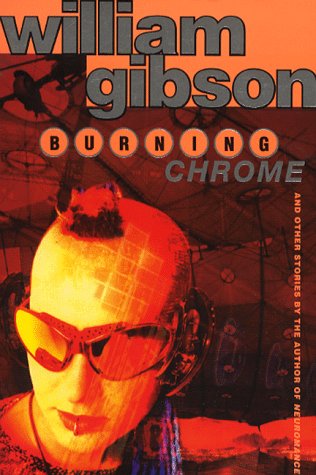
Choose a William Gibson short story such as Burning Chrome (see readings week 10). Compare the economic and social world it conjures with the imagined world of another cyberpunk author’s short story or novel. How close are these imagined worlds to our world and are we moving towards the imagined worlds or away from them?

As for what two stories I'd choose to compare, I thought I'd do Burning Chrome (seeing as it's a reading) and either Snow Crash, by Neal Stephenson (I read his Anathem, which was interesting) or Do Androids Dream of Electric Sheep, by Philip K. Dick (the inspiration behind Blade Runner). I still haven't decided, but really, for a basic plan, it doesn't matter.

So here's the plan.

1. Introduction.
    I'll probably introduce cyberpunk briefly, introduce the topic question, and outline the essay.

2. 1st Body Paragraph.
Old-School.
    Here I'll compare the economic world both books conjure. I'll detail them, compare them, and then further compare them with reality.

3. 2nd Body Paragraph.
    Here we'll focus on the social. Again, I'll compare and compare again.

4. Probably the conclusion, it's only 1000 words after all. Here I'll sum up, presenting a combined view of what cyberpunk predicts and reality as it is and what it might be. Here I'll explicitly answer the question, using all the afore paragraphs as evidence.

So that's the plan!

Tuesday, 20 September 2011

New Concept (again). (Week 8)

So after some experimentation, my most recent concept involving the city, didn't work. There wasn't enough of a narrative to it, it was just a collection of shots of different parts of the city.

So I decided to try a different tack. I hate horror movies, but they way that they influence the viewer - with shadows, soundtrack etc. is pretty cool. So I thought i'd give a survival horror film a try. I shot in my local church, with the help of some friends at night, using only my iPhone, as was my intention all along.

My new concept is:

'A man, alone at night in a deserted building, hears a noise, and seeks to find its cause.'

Here are some clips - I shot more than I used, as is usually the case.


I posted them on YouTube as well, but couldn't find them in the YouTube embedding tool. So I just uploaded them here.

Next step is to cut and edit everything, then whip up a soundtrack.

Wednesday, 14 September 2011

Copyright and Creative Commons (Week 8)

This week, we looked at copyright and Creative Commons, and how it came about. Copyright is designed to protect the intellectual property of an individual or company. Movies, music, programs, etc. are generally all copyrighted; so that others can't claim the work as their own, or make money from it.It seems fair enough, in theory. In reality though, it is far more restricting, resulting in things like harmless fan-made videos on YouTube being taken down for copyright violation. So why doesn't strict copyrighting make sense for some things?

Originally, works were only copyrighted where there was the 'intention of commercial exploitation.' The US government granted copyright to authors only who had their work deposited into the national library. This developed though, and soon everything was able to be copyrighted, and for a longer period of time.

Technology, while enabling previously impossible levels of creativity, has also managed to restrict it, thanks to copyright. Thoughts and words spoken are not copyright, but if those words are written on a blog, they become yours. The laws regarding copyright are becoming increasingly more policed, and increasingly more ridiculous and impractical.

And then there was Creative Commons. It was an alternative to the rigid set of copyright laws, allowing the creators to pick and choose the things people could do with their work. Attribution was the important thing - that people acknowledged that they were using the work of someone else. Then the creator could pick from a number of options:
  • Users may make commercial uses of your work — can they charge money or get paid for the things they do with your works?
  • Users may "creative derivative works" — that is, can they modify, adapt, remix or otherwise tinker with your work? And, if so, whether:
  • Users are required to share their creations on the same terms — that is, if I make a movie from your book, am I required to share my movie on the same terms as your book? 
These terms allowed people to exercise creativity, while still ensuring the original creator gets credit for what they've done. What makes the Creative Commons so useful is that not only is it a non-for-profit organisation, but it's also international. People all around the world can use it.

Strict copyright laws don't make sense for a number of things - fan videos on YouTube, remixed songs, and practically anything that is created that uses something from a copyrighted work. Even if that something isn't designed for commercial use or for financial gain. Creative Commons however allows the flexibility that the rigid set of copyright laws can't, it encourages creativity and sharing while not completely abandoning the rights of the creator. 


References:
- Muir, Adam 2011 Lecture on the 15th of September at Griffith University
- Doctorow, C 2007, 'Cory Doctorow: Creative Commons,' viewed 15 September, at <http://www.locusmag.com/Features/2007/11/cory-doctorow-creative-commons.html>
- Kim, M 2007, 'The Creative Commons and copyright protection in the digital era: Uses of Creative Commons licenses,' Journal of Computer-Mediated Communication, 13(1), article 10, viewed 15 September, at <http://jcmc.indiana.edu/vol13/issue1/kim.html> 
- Image sourced from: http://www.brisbanegrammar.com/blogs/library/?tag=creative-commons


Wednesday, 7 September 2011

Citizen Journalism and Traditional Journalism ( Week 7)

Being a journalism student, how could I resist this topic? 'Is citizen journalism the end of traditional journalism?'

First, we need to know what we're talking about. Traditional journalism is obvious - it's print, tv, radio etc. Information that is distributed by someone who is both paid for it, and trained for it.
Citizen journalism is a phenomenon that arose with web 2.0 - it's information distributed by members of the general public - blogs and the like.

But to answer the question, there is first another one in the way. Are they actually competing?

Rupert Murdoch, owner of News Corporation, supports citizen journalism, saying that 'young people no longer wanted news presented to them as a gospel by a god-like figure who told them what was important. They want news that speaks to them personally.'
And the BBC (the British Broadcasting Corporation) has gone from passively accepting user-generated content to soliciting it, saying that 'it provided audiences with a wider diversity of voices.' This was evident first in the London bombings in 2005, where people submitted thousands of stills, videos, texts, and eyewitness accounts on request. Similar things have happened with other large newsworthy events, such as the more recent riots in England, where people again submitted pictures and videos.
Another instance is The New York Times, which released a community centered news site, The Local, linked in to the main site, on which the public contributes stories. “We’ll be striving to empower residents to report on their own communities,” said editor for digital initiatives, Jim Schachter. 

As Richard Sambook, a BBC journalist for 30 years says, 'citizen and professional journalism are “complementary.”' The emergence of one in no way indicates the fall of the other. Indeed, most news companies and websites are trying to incorporate it, use it to give viewers a more realistic viewpoint from many different views, all from everyday people like themselves. Citizen journalism is useful in providing information not available from conventional information sources, or information that is cheaper. Cooking blogs can provide recipes cheaper than a magazine, and users can comment on it and recommend changes. Technology blogs can give information more up to date than conventional sources.
But the two can, and are, augmenting each other. They can, and are, coexisting, helping each other, and covering the others flaws.

So is citizen journalism the end of traditional journalism? No more than twitter is the end of Facebook. the two can coexist and incorporate each other.

References:

- Sambook, R 2008, 'Four Types of Citizen Journalism,' YouTube Video, viewed on 8 September 2011, at <http://www.youtube.com/watch?v=OrJH6TYVfmk>


- Plush, C 2009, 'Big media embraces citizen journalism,' viewed on 8 September 2011, at <http://neovox.journalismaustralia.com/big_media_embraces_eir.php>

- Bruns, A n.d. 'News Blogs and Citizen Journalism: New Directions for E-Journalism,' viewed 8 September 2011, at <http://snurb.info/files/News%20Blogs%20and%20Citizen%20Journalism.pdf>

- Bruns, A n.d. 'From Reader to Writer: Citizen Journalism as News Produsage,' viewed 8 September 2011, at <http://produsage.org/files/2010/From%20Reader%20to%20Writer.pdf> 

Video Progress (Week 7)

Not a lot to say on my video, I'm sorry to say that I haven't done too much on it due to higher priorities; that is, assignments that are due earlier.

The city is alive, and it communicates.
That said, I have changed my concept from grass growing (It still probably would've worked, but not as well as I wanted) to the life of a city. The way a city wakes up in the morning, the way it lives and breathes, the way it then slowly slips back into quiet sleep. The way the city communicates.

I plan to go into the city and take a number of shots at different times of the day, emphasising the changes. Then I'll edit them to chronological order, and lay a soundtrack over the top.

That's the theory anyway. I plan to get my footage sometime next week, so I'll probably post some of the clips then.